Our Technology


FEATURE OSSEOPRINT3D MATERIALIZE
Required Skills General Medical School training with Diagnostic Imaging Engineering skills with special training in Cad concepts and software
Cost of Ownership Included with printer service agreement Tens of thousands $$ in annual subscription
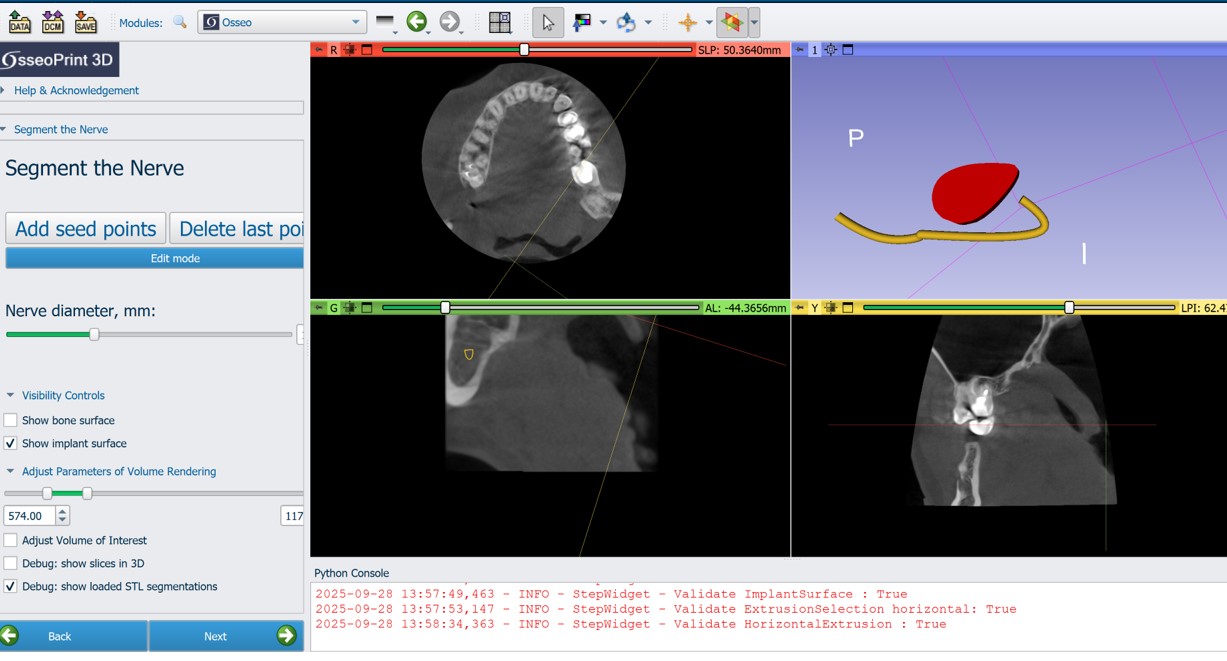
Speed of Production 15 minutes 40 min to 1.5 hours
End result Full integration with proprietary 3D printer. By the end of shape development. You hit PRINT button right like in Microsoft Word and 3D printing process starts automatically STL model that requires further manual processing and conversion into the printing script and manual import into 3D printer


What we do?

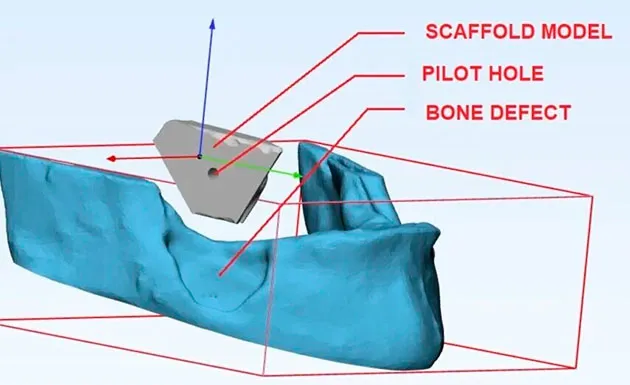
OsseoPrint3D is an aseptic, point-of-care system for patient-specific bone graft fabrication.

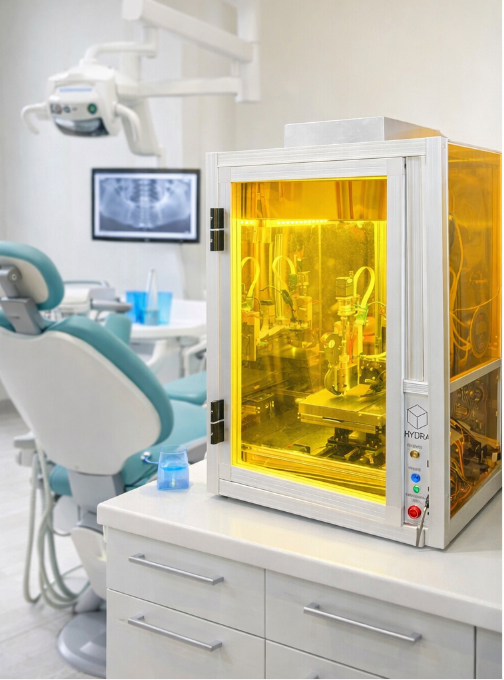
The printer operates aseptically, while sterile single-use cartridges and print plates ensure full compliance with surgical infection-control standards.

The platform targets bone grafts (not micro-grafts), with an initial focus on dental applications supported by a clear FDA 510(k) regulatory pathway.


ASEPTIC 3D PRINTING

Aseptic System Architecture and Sterility Strategy 

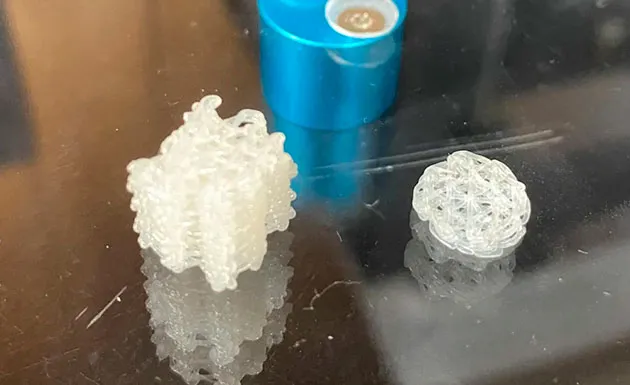
Osseoprint 3D’s printers are designed to produce bone scaffolds with no post-processing. Using particle counters, sterilized components and laminar airflow, bone scaffolds can be printed in an aseptic environment and leave the printer sterile. Our machines are compliant with current infection and sterilization protocols.


BIORESORBABLE POLYMER

Polydioxanone (PDO) is a synthetic, bioresorbable polyester used in medicine for temporary load-bearing applications, offering a balance of strength, flexibility, controlled degradation, low inflammatory response, and good tissue tolerance. It resorbs over several months, retaining mechanical integrity and tensile strength during early healing longer than many fast-resorbing polymers, then safely disappears as tissue regenerates.


Joachim Kohn, PhD, FBSE
Former Chief Scientist Advisor

Dr. Kohn is Distinguished Professor Emeritus of the Chemistry and Chemical Biology Department at the School of Arts and Sciences, Rutgers University and former director of the New Jersey Center of Biomaterials.

He specializes in biocompatible polymers and holds 80 US patents. He is a three-time recipient of the Edison Award for the best medical technology patent in New Jersey.


Want to work with us? let's talk